Stop hidden moisture and protect your roof from below
Roof Ventilation and Underlayment Replacement Humble TX
Roof Ventilation and Underlayment Replacement Humble TX helps homeowners facing leaks, damp attic insulation, or a roof that is nearing replacement. We remove worn protective layers, check the roof decking, and correct ventilation imbalances so your new roof can shed water and release trapped heat. Our team serves Humble, Texas, including homeowners comparing attic ventilation and roof underlayment replacement Humble options before another storm exposes weak spots.
Roof Ventilation and Underlayment Replacement Humble TX
Roof Ventilation and Underlayment Replacement Humble TX is a roof-system service that renews the water-shedding layer beneath the roof covering and corrects attic intake and exhaust airflow when deterioration or imbalance threatens performance. We remove shingles or other covering as needed, inspect roof decking plywood, install compatible synthetic roof underlayment or asphalt-saturated roofing felt, and replace damaged roof flashing. We also assess soffit intake, ridge vents, and other exhaust points. The goal is a continuous secondary water barrier and an airflow path that moves warm, moisture-laden air out without pulling conditioned air from your living space.
Humble's humid weather, heavy rain, and seasonal storms put concealed roof layers under steady pressure. Wind-lifted shingles can admit water at nail holes, while poor attic ventilation encourages condensation on cooler surfaces and can shorten shingle life. We check for staining, soft decking, blocked intake, and underlayment deterioration before recommending work. If your roof covering is already due, roof underlayment replacement during a new roof in Humble TX lets us correct hidden defects while the deck is exposed, rather than closing them beneath fresh shingles.
Roof Ventilation and Underlayment Replacement Humble TX covers inspection and renewal of the roof's secondary water barrier, plus ventilation corrections identified during assessment. We check the deck and connect new layers to flashing and roof edges. Decking replacement, insulation work, and full roof-covering replacement are added when inspection shows they are needed; we explain those items before proceeding.
01
✓
Underlayment Removal and Installation
We remove the worn layer in the repair or replacement area, inspect the exposed surface, and install compatible synthetic underlayment or asphalt-saturated roofing felt. Correct laps, fastening, and integration at eaves and transitions help water drain outward rather than beneath the barrier.
02
✓
Attic Ventilation Review
We check intake openings, exhaust vents, and attic conditions for blocked paths or imbalance. The review considers attic dimensions and roof layout, then identifies practical changes such as restoring intake access or integrating ridge vents with the selected roof system.
03
✓
Deck and Flashing Inspection
After removal exposes the roof deck, we look for soft plywood, moisture staining, and failed fastening. We also inspect flashing around valleys, pipes, and other penetrations so the new underlayment connects to sound, water-shedding details.
04
✓
Final Installation Check
We check visible laps, roof edges, flashing transitions, and vent openings after installation. The crew clears roofing debris and stray fasteners, then reviews the completed work with you and notes any maintenance items that support the repaired assembly.
How it works
What to Expect During the Work
We begin with a roof and attic inspection, usually taking 45 to 90 minutes for a standard home. Our team checks leak paths, shingle condition, roof penetrations, visible decking, intake openings, and exhaust vents. We measure attic dimensions and document the ventilation layout so the recommendation reflects your roof rather than a generic vent count.
Before removing material, we place ground protection near walls, landscaping, and driveway access, then set a roofing ladder and fall-protection harness for safe access. We identify the work zone and keep debris controlled. You will know which areas need access and where vehicles or outdoor items should be moved before tear-off begins.
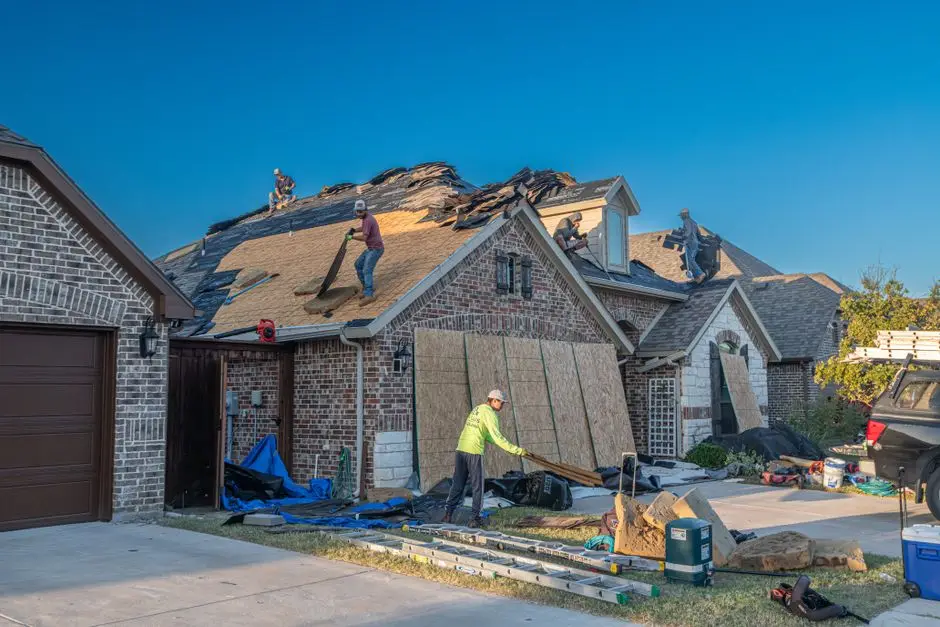
We use a shingle remover or roofing tear-off shovel to lift the covering and worn underlayment in the designated area. The exposed deck reveals nail pull-through, water staining, and soft spots that a surface inspection cannot confirm. If we find damage, we show you the location and explain the repair before rebuilding that section.
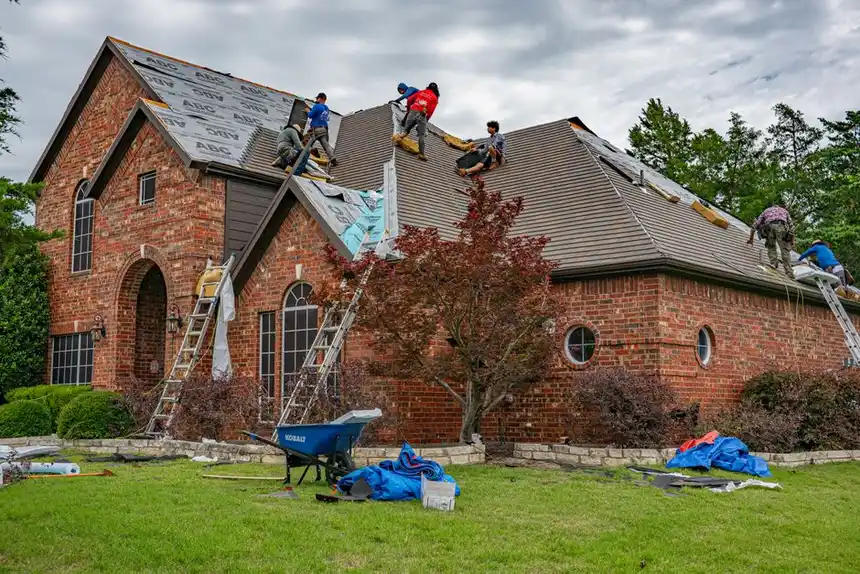
We replace damaged deck sections, install compatible underlayment, and integrate it with flashing, drip edge, and roof penetrations. Then we correct the planned intake and exhaust details, such as ridge vents, while keeping the selected roofing manufacturer's installation requirements in view. Fastener placement and laps matter; we do not leave loose edges for wind to lift.
After covering is installed, we inspect transitions, vent openings, flashing, and visible fastening details. We collect debris and use a ground magnet for stray nails, then walk you through the completed work and any maintenance notes. For a straightforward residential roof, installation and final checks commonly fit within 1 to 3 working days.
STEP 01Inspect and Measure
We begin with a roof and attic inspection, usually taking 45 to 90 minutes for a standard home. Our team checks leak paths, shingle condition, roof penetrations, visible decking, intake openings, and exhaust vents. We measure attic dimensions and document the ventilation layout so the recommendation reflects your roof rather than a generic vent count.
Tools & methods
Tools and Installation Methods
01
✓
Moisture meter
We check suspect roof decking and attic materials when staining or dampness is present. Readings help distinguish a dry old mark from active moisture that needs further investigation before the roof is closed.
02
✓
Roof ventilation calculator
We use attic dimensions and vent specifications to evaluate the ventilation layout. The calculation supports balanced intake and exhaust decisions rather than relying on a single vent count.
03
✓
Roofing tear-off shovel
This tool lifts shingles and underlayment during controlled removal. Exposing the deck lets us inspect fastening, water damage, and the condition of the old barrier before installing new materials.
04
✓
Roofing coil nailer
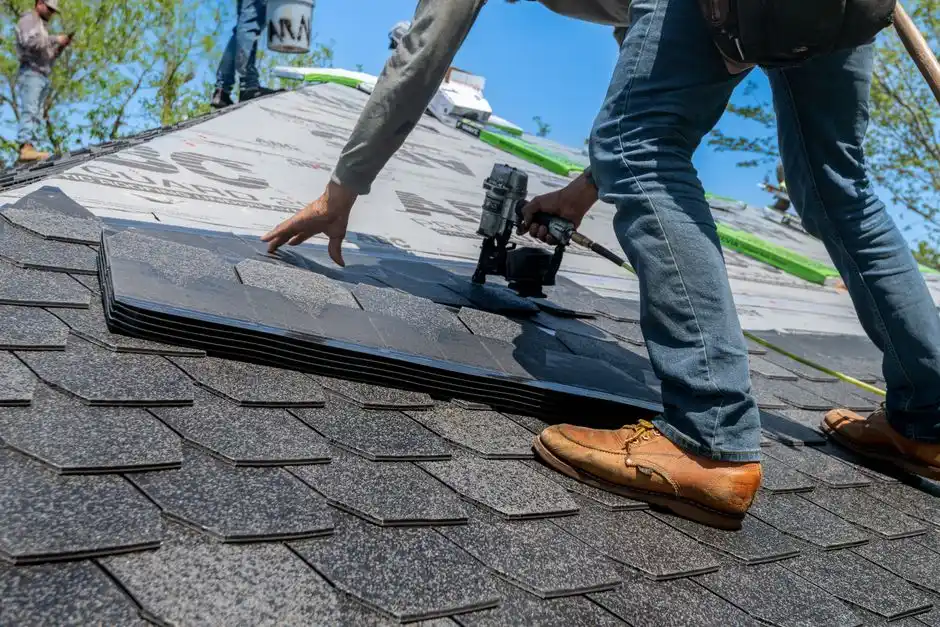
We use the appropriate fastener and tool setup for compatible roof components, following product requirements for placement and attachment. Secure fastening helps keep edges, vents, and covering details in position.
05
✓
Fall-protection harness
Our crew uses fall-protection equipment when accessing elevated roof areas and follows OSHA fall protection standards. Safe access supports careful work at ridges, eaves, and other locations where ventilation and underlayment details meet.
Real results
Before and after.
Roof Ventilation and Underlayment Replacement
Recurring Vent-Area Leak
A homeowner noticed a ceiling stain after several heavy rains and had already replaced a few shingles. The actual opening was near a roof vent, where aged underlayment and a damaged flashing connection let water reach the deck. The attic insulation was damp around the leak path, although the roof surface looked mostly intact.
After: We removed the affected covering, checked the deck, replaced the damaged underlayment, and corrected the vent flashing. The crew confirmed a continuous water-shedding path around the penetration and cleared the roof debris before leaving. The ceiling stain stopped growing after the repair, and the homeowner had a clear record of the work area.
The home's attic stayed hot into the evening, and a musty odor appeared after humid weather. Existing exhaust vents had limited intake, so simply adding another outlet risked worsening the imbalance. Underlayment was also nearing the end of its service life as the owner planned a new roof.
After: During roof work, we renewed the underlayment and corrected the intake path to work with the ridge exhaust. The ventilation layout was reviewed against attic dimensions, and the roof layers were installed to the selected product requirements. The owner received a balanced plan instead of an isolated vent addition.
Wind lifted shingles along a roof edge, allowing rain to reach worn felt beneath them. After removal began, several plywood areas showed staining and one section felt soft underfoot. The damaged edge detail also left the underlayment vulnerable to further wind-driven rain.
After: We replaced the compromised deck section, installed new underlayment, and rebuilt the edge detail before restoring the roof covering. The repaired area had a stable fastening base and a continuous water barrier. We checked nearby flashing and vents as part of the final inspection, rather than limiting the work to visible missing shingles.
Roof Ventilation and Underlayment Replacement Humble TX targets failures that often stay hidden until a ceiling stain, musty attic, or loose shingle makes them obvious. We trace the source, expose the affected layers, and rebuild the vulnerable details. That approach helps prevent a surface patch from leaving the underlying cause untouched.
Roof leaks return after repeated shingle patches near vents.
We inspect vent collars, flashing, and surrounding underlayment, then remove enough material to identify the entry point. We replace deteriorated layers, repair the detail that failed, and check the deck before restoring the roof covering. You see the affected area and the completed repair rather than relying on another surface-only patch.
↗02
Attic stays humid despite a roof that looks intact.
We evaluate intake and exhaust together, check for blocked soffit paths, and review attic conditions for moisture clues. Then we correct the airflow layout as part of the roof work where appropriate. We do not add exhaust without considering intake, because an unbalanced system can pull conditioned air from the home.
↗03
Wind-driven rain reaches the deck beneath missing shingles.
We remove damaged covering, inspect the exposed deck, and replace compromised underlayment with a compatible product. We check edge details and flashing, then reinstall the roof covering with secure fastening. If a storm has opened the roof, temporary protection can limit further exposure before permanent work.
↗04
Soft roof decking appears during a planned replacement.
We test suspect areas and identify damaged panels while the roof is open. We replace unsound decking before installing new underlayment, then verify that fastening has a solid substrate. This sequence prevents a fresh roof layer from concealing a structural weakness that should have been corrected first.
↗
Proof you can check
Clear Standards and Workmanship
Texas roofing contractor registration and local requirements · Applicable Texas and local authorities
OSHA fall protection standards · Occupational Safety and Health Administration
International Residential Code · International Code Council
NRCA roofing guidelines · National Roofing Contractors Association
Synthetic roof underlayment or asphalt-saturated roofing felt can suit Humble roofs when matched to the roof covering and installation requirements. We check slope, exposure, deck condition, and manufacturer specifications before choosing. Synthetic products are commonly selected for tear resistance and handling, while felt remains an option in compatible assemblies. The right choice also depends on flashing details and how the roof sheds heavy rain.
A qualified roofing contractor replaces underlayment by removing enough roof covering to expose the deck, checking for damage, and installing a compatible water barrier. We provide roof underlayment replacement in Humble as part of a coordinated roof repair or replacement. Ask for an inspection of deck condition, flashing, and ventilation, because replacing felt without correcting those connected issues can leave the original leak path in place.
Yes, if inspection shows inadequate or unbalanced airflow, upgrading ventilation during roof replacement is usually the most direct time to correct it. We assess intake and exhaust together and verify the layout against attic size and applicable code. The work can include clearing intake paths or adding a compatible ridge vent. Do not simply add exhaust vents; without enough intake, the system may draw conditioned air from living areas.
Yes, poor roof ventilation can trap warm, moisture-laden air and contribute to condensation on cooler attic surfaces. Signs include damp insulation, darkened sheathing, musty odors, or rusty fasteners. We check for plumbing or roof leaks as well, since ventilation is not the only possible source. Correcting airflow and replacing damaged underlayment or decking addresses the roof-side causes, while wet insulation may need separate attention.
Schedule Roof Ventilation and Underlayment Replacement
If your attic feels damp, shingles are lifting, or a leak has returned, we will inspect the roof layers and explain the repair. Our team serves Humble, TX, with upfront pricing before work begins. Call today to arrange your roof assessment.
Call Humble Roof Replacement Pros at 832-730-5390 to discuss a roof leak, storm damage, or a planned replacement. Our office is available Monday through Friday, 8:00 a.m. to 6:00 p.m.; tell us what you are seeing and where the property is located. We serve Humble, TX and nearby Harris County communities.